


Every metre of fabric carries an environmental cost from the energy used.
Each year, the global textile industry consumes vast amounts of natural resources, while millions of tonnes of high-quality fabric remain unused or go to waste.
At Formé Textile, we see circular sourcing as an essential part of a more responsible material practice.
That’s why we’ve partnered with Circular Sourcing, a Melbourne-based digital platform dedicated to redistributing textile mills deadstock and premium surplus fabrics. Through this partnership, our leftover fabrics from sampling and production are carefully re-homed instead of being stored indefinitely or discarded.
01
The textile industry extracts 98 million tonnes of non-renewable resources every year
(Ellen MacArthur Foundation, 2017, A New Textiles Economy: Redesigning Fashion’s Future’)
02
Consumes 93 billion m³ of water annually
(Ellen MacArthur Foundation, 2017, A New Textiles Economy: Redesigning Fashion’s Future’)
03
Tens of millions of tonnes of fabric are going to waste annually, with around 21% of textiles not being sold or utilised as intended.
(European Environment Agency, 2024)
Our Vision for a Greener Future
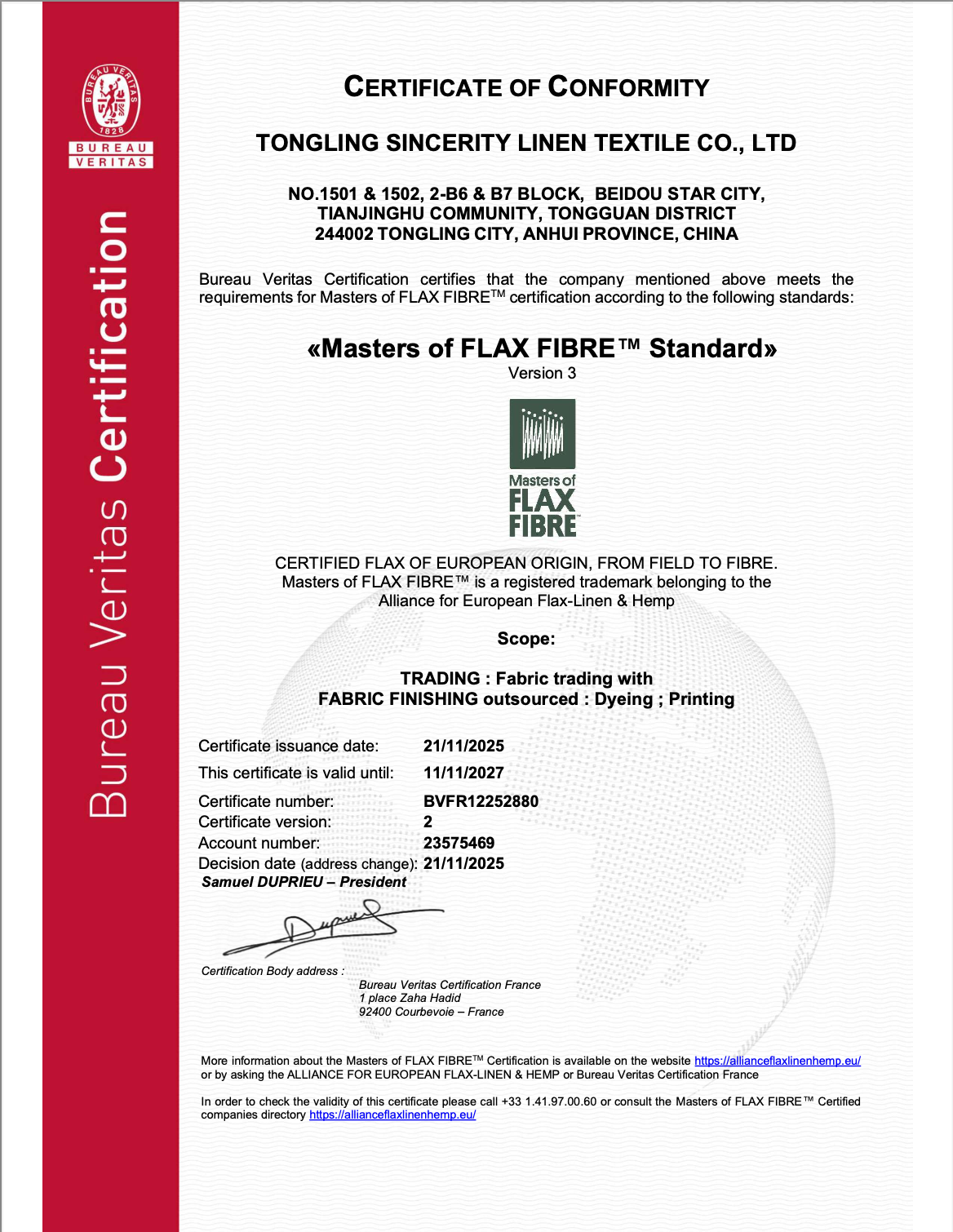
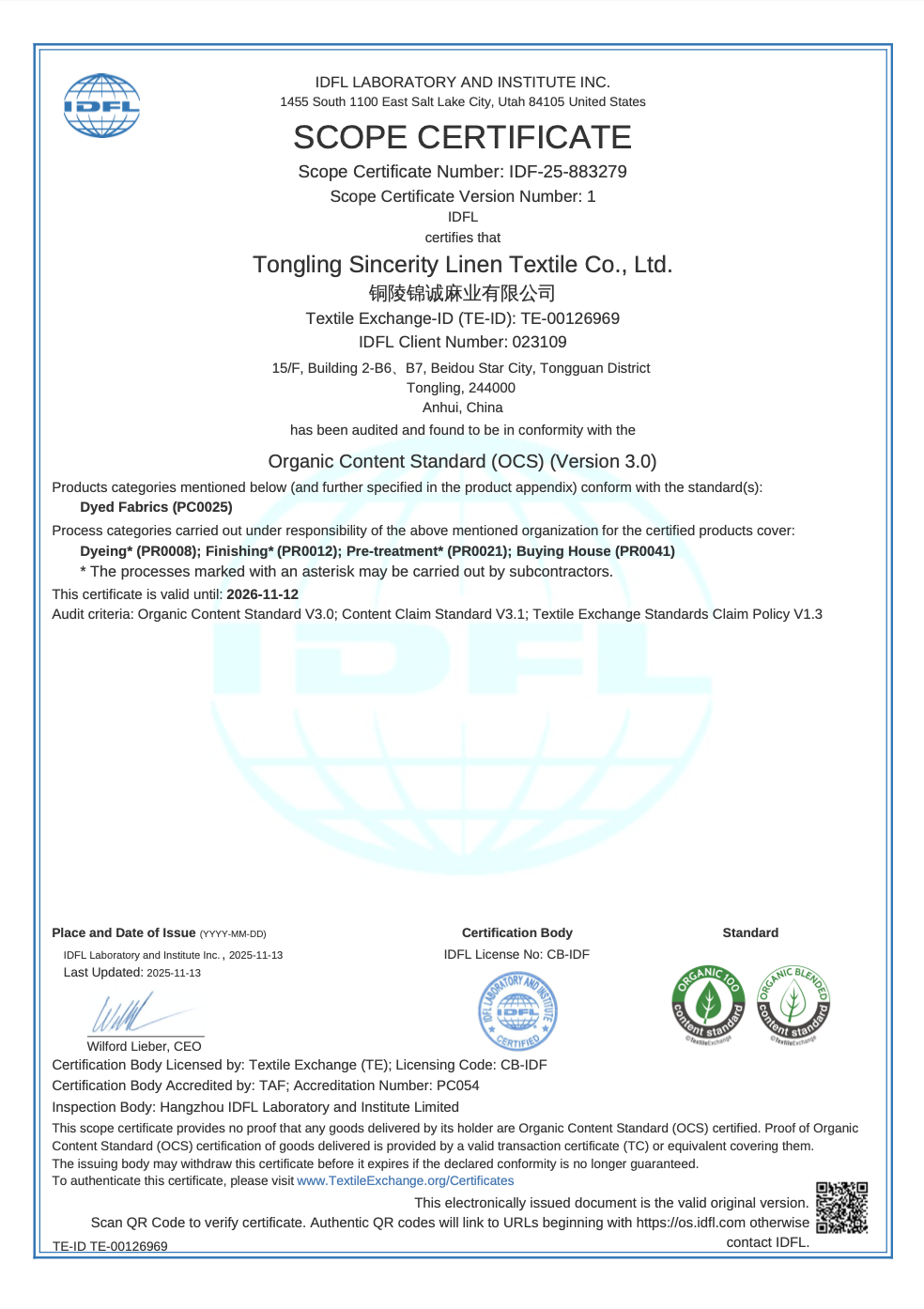
Quality, integrity, and sustainability are at the heart of everything we do. Our certifications reflect our dedication to meeting the highest industry standards and our promise to deliver exceptional linen solutions to our clients worldwide.
How We Recycle Fibre?
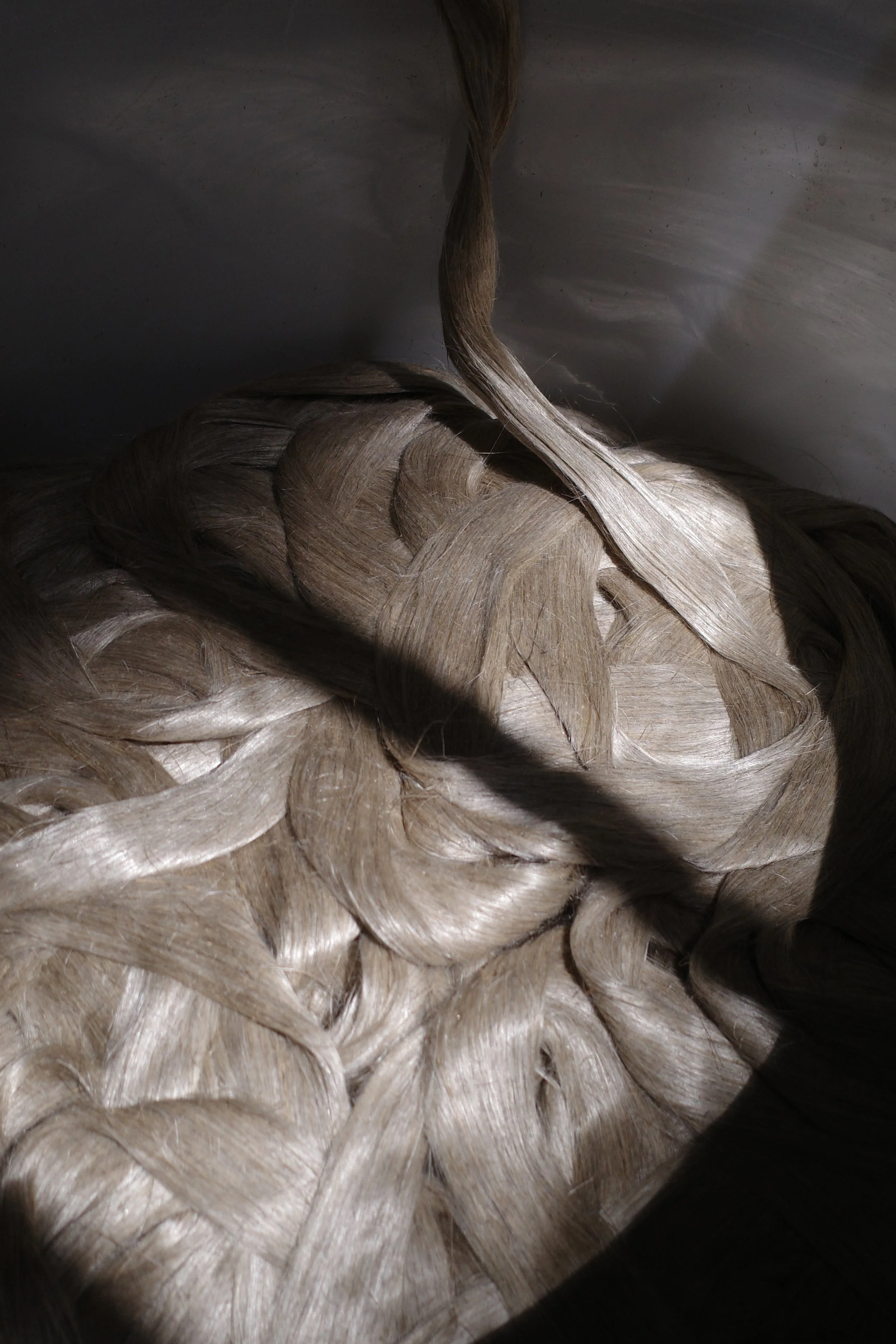
Long Flax Fibres
Spun into high-count, pure linen yarns, used for premium-quality fabrics with superior strength, durability and refined hand feel.
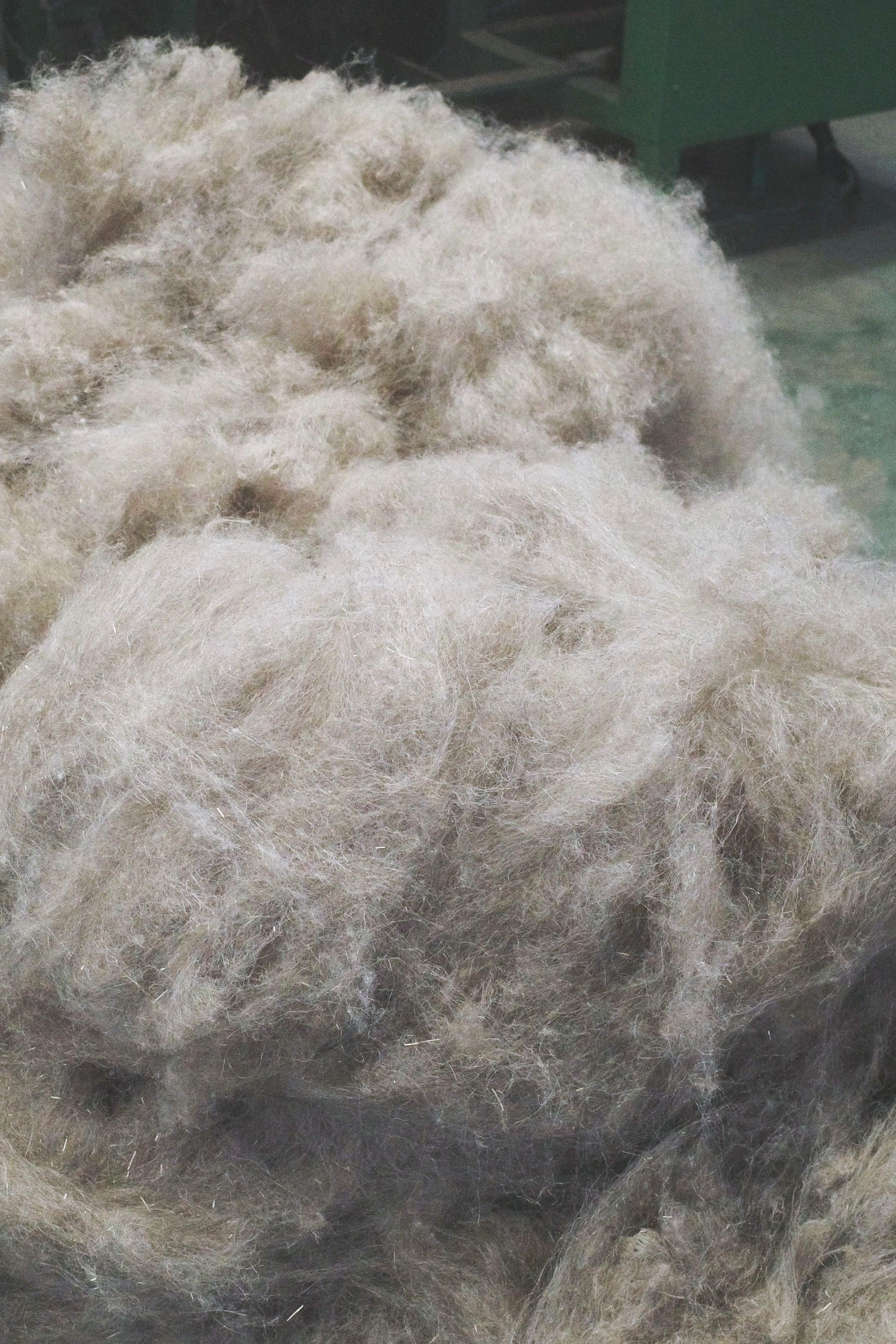
Short Flax Fibres
Shorter fibres generated during processing are efficiently utilised for lower-count pure linen or linen-blended yarns, extending material usability while maintaining performance and cost efficiency.
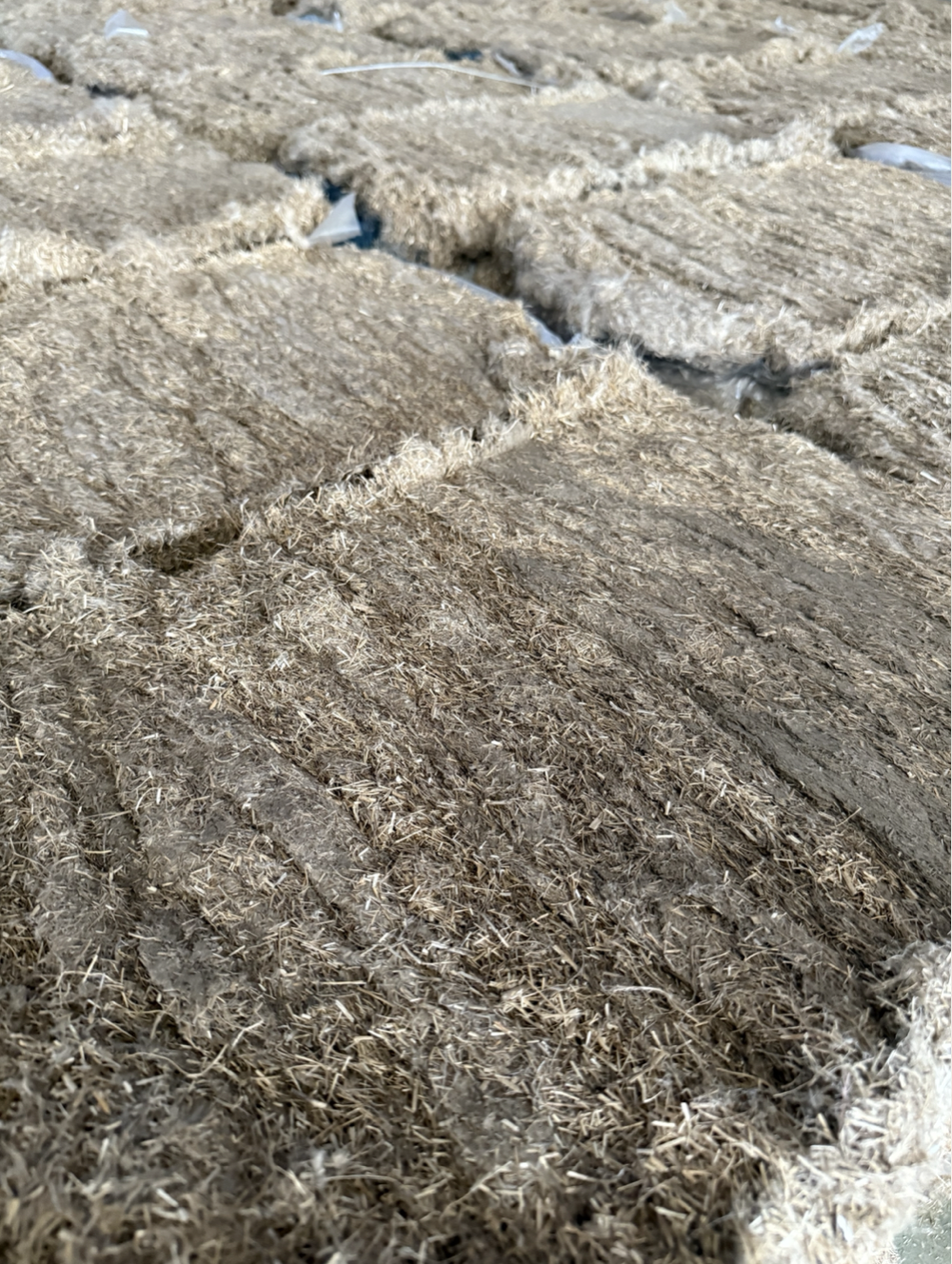
Production Residues & Waste
Remaining flax residues are responsibly collected and repurposed into alternative materials, including eco-friendly paper and ash-based applications.

Driving Positive Change Across the Supply Chain
We work closely with industry-leading eco-communities to promote sustainable fibers and materials that align with our clients’ values. By refining our vertically integrated production processes and collaborating with forward-thinking partners, we ensure that every fabric we produce reduces environmental impact while meeting the highest standards of quality and efficiency.